My novel about love, betrayal and chess in New Orleans: The Pride and the Sorrow

Showing posts with label UK. Show all posts

Monday, March 29, 2010

Top 100 Creative Writing Blogs


From poetry to lengthy prose, creative writing can be a great way to express yourself. Of course, even the best students and writers can use a few tips, a little inspiration and a whole lot of help getting their work out there. These blogs offer all of that and more. From blogs that focus on writers still trying to make it in the publishing world to those providing updates from best selling authors, you’ll find all kinds of information geared towards improving and informing your creative writing.

General

These blogs cover a wide range of issues for students of the written word.

  1. Writer Unboxed: Learn both about the creative and business sides of fiction writing from this great blog.
  2. Backstory: Ever wonder where writers get their inspiration? You’ll find loads of posts that record just that and you can contribute your own stories as well.
  3. Write Anything: Check out this multi-author blog to find writing challenges, inspiration and shared writing.
  4. Inkygirl: Daily Diversions for Writers: This blogger not only posts about using the Internet to improve your writing but posts her own comics frequently as well.
  5. Women on Writing: Get information on writing geared just towards female writers out there.
  6. Cute Writing: Here you’ll find posts on writing, blogging and publishing and many articles focus on ways to make your work more efficient.
  7. Write to Done: If you enjoy the blog Zen Habits, you’ll appreciate this blog by the same author. This site focuses on simple, effective ways to write more, better.
  8. The Urban Muse: Freelance writer Susan Johnston provides tips and tidbits for other working writers out there.
  9. Writing Forward: From grammar tips to ideas for improving your creative writing, check out the helpful posts on this site.
  10. Writer’s Write: This blog is a great place to find information about writers, books and the publishing world.
  11. Creative Writing Corner: Connect with your creative side through the posts on this blog.
  12. Creative Writing Contests: Want to challenge your creative skills? This blog can direct you to the great number of writing competitions out there.

Aspiring Authors

These bloggers are writing on the ‘net and off, still waiting to get their best work published.

  1. The Desperate Writer: This writer and cosmetologist shares her stories on this blog, both personal and creative.
  2. Incurable Disease of Writing: Blogger Missy is getting her degree in creative writing and posts about her experiences on this site.
  3. Emerging Writers Network: If you’re just getting started in your writing career, check out this site to learn about the ins and outs of writing and about other writers working towards success.
  4. Ficticity: Check out this site to find posted stories, writing tips and even a few book reviews.
  5. Authors’ Blogs: This isn’t just one blog, but a collection of numerous aspiring writers sites, so you can take your pick of reading material.
  6. Plot Monkeys: These four bloggers talk about everything from their everyday lives to the books they love.
  7. Maternal Spark: Moms who love to write or create on the side

Published Authors

Get some advice, inspiration and motivation from these authors doing what they love and getting paid for it.

  1. The Orwell Diaries: Most writers are familiar with the work of George Orwell. Here you’ll find regular postings from his personal diaries.
  2. Tom Conoby’s Writing Blog: This blogger shares his thoughts on books he reads, his own writing and much more.
  3. John Baker’s Blog: This working writer shares his passions– reading and writing– on this site.
  4. The Man In Black: Young mystery writer Jason Pinter shares his thoughts on just about everything on this blog.
  5. Neil Gaiman’s Journal: This well-known writer has published a large number of books, several of which have been made into major motion pictures. Check out his blog for more about what he’s working on right now.
  6. Wil Wheaton in Exile: Readers of this blog might recognize his name from his days on Star Trek: The Next Generation but these days this actor spends more of this time writing books and posting on his blog.
  7. A Writer’s Life: Love the TV series Monk? Learn more about the writer behind the books the series is based on from this blog.
  8. The Paperback Writer: With several published books under her belt, this blogger shares her writing tips as well as information about her personal life.
  9. Pocket Full of Words: Novelist Holly Lisle shares her experiences as a writer on her blog.
  10. Beyond the Beyond: Bruce Sterling has written numerous science fiction novels and now shares his thoughts on science and technology on his WIRED blog.
  11. Contrary Brin: Scientist and author David Brin maintains this site where readers can talk about issues from his books or just about anything else.
  12. Scott Berkun: This author teaches creative thinking, writes books and give public talks. Read about his writing adventures and otherwise here.

Improving Your Craft

Get some tips on becoming a better writer from these blogs.

  1. Becoming a Writer Seriously: Aspiring writers can find all kinds of helpful advice and guidance on this blog.
  2. WordSwimmer: Learn to understand the writing process a little better with a little help from blogger Bruce Black. There are loads of interviews with authors as well as suggestions on improving your writing.
  3. Time to Write: Blogger Jurgen Wolff wants to strike a creative spark in writers of all kinds by providing tips and inspiration here.
  4. Flogging the Quill: Check out this blog to learn more about the craft of creative storytelling.
  5. Six Sentences: What can you write in six sentences? Share your attempt at this writing exercise on this blog.
  6. Luc Reid: From tips on finding time to practice writing to information about the publishing industry, you’ll find loads of helpful posts on this blog.
  7. The Writing Show: While more podcast than true blog, this site is a good place for writers to get answers to their questions and get help finding inspiration.
  8. Men With Pens: Whether you’re a writer freelancing or just writing for fun, you’ll find tips on how to do it better on this blog.
  9. Write a Better Novel: Make sure whatever you’re writing will get the attention it deserves when time comes to get it published. This blog provides all kinds of information on creating a better novel, no matter the subject.
  10. Write Better: Here you’ll find a wide range of writing tips to get your creative writing in top shape.
  11. Clear Writing with Mr. Clarity: Learn to get to the point and write clearly and concisely whether you’re writing a letter at work or working on a book.
  12. Mike’s Writing Workshop: This blogger is all about posting things that can help writers get better and get inspired.
  13. Kim’s Craft Blog: Learn about writing fiction, memoirs and other creative writing from this writer who teaches courses at The Cambridge Center for Adult Education.

Grammar and Editing

You may have the best ideas but that doesn’t mean much if you can’t write them well. These blogs will help you tune up your writing so it’s publish-worthy.

  1. GrammarBlog: Laugh at the grammar and spelling errors of others while getting tips on improving your own skills on this blog.
  2. Evil Editor: This editor might be evil, but the tips provided on this blog can really help you refine your stories.
  3. Blue Pencil Editing: This blog is both a good resource for working editors and and writers in search of a little guidance.
  4. Editing and Proofreading Hints and Tips: Get simple tips on improving your editing process from this blog.
  5. Headsup: the blog: Here you’ll find posts about the sometimes frustrating world of editing and learn what not to do.
  6. Grammarphobia: This site offers readers the chance to ask their own grammar and language questions and get answers.
  7. Apostrophe Abuse: Think you know how to use the apostrophe? This blog might teach you otherwise.
  8. Daily Writing Tips: Get some daily advice on how to improve the basics of your writing.
  9. ProWriting Tips: This blog is home to numerous grammar and writing tips.
  10. The Engine Room: JD, a copy editor, runs this blog all about language use that can help you get a handle on your usage.
  11. Cheryl Norman, Grammar Cop: If you’ve got some questions about grammar that need answering, visit this blog.
  12. English4Today: Get a handle on the English language through the guidance of blogger Anthony Hughes.

Getting Published

The ultimate goal for many students and professionals working on creative writing is to get work published. This blogs can help you learn about the business, get your work out there, or even publish it yourself.

  1. Ask Allison: Ask your questions about breaking publishing and gets answers from this helpful blogger.
  2. Guide to Literary Agents: Get some tips on where and how to find a literary agent to represent your work when the time comes.
  3. Beacon Literary Services: Emerging writers and those with a little experience under their belts alike can take advantage of the publishing advice offered here.
  4. Questions and Quandaries: This Writers Digest blog answers a wide variety of questions about publishing.
  5. Writer Beware Blogs: While you may be desperate to get your work out there make sure you protect yourself from scams. The information in this blog can help you stay safe.
  6. The Swivet: Colleen Lindsay is a literary agent and you can read her reactions to recent publications and if you meet her requirements even submit your own work.
  7. The Rejecter: This blogger isn’t a literary agent but an assistant to one, the person you’ll have to go through to get your work published, and she posts all about her work on this blog.
  8. Booksquare: This blog works to dissect the publishing industry so you can learn it inside and out.
  9. Pubrants: Literary agent Kristen blogs about everything publishing from queries to working with writers.
  10. Nathan Bransford Literary Agent: Want to know more about literary agents and the publishing world? Check out this blog.
  11. Practicing Writing: This blog posts plenty on writing advice as well as the latest publishing opportunities.
  12. Bob Baker’s Full-Time Author Blog: Thinking of making the leap to being a full-time writer? This blog can be a great resource on publishing your own book to set the stage.
  13. Future Perfect Publishing: Explore all the possibilities for publishing that are out there through the help of this blog by Tom Masters.

Genre Focused

These creative writing blogs focus on one particular type of writing, such as mysteries, romance and fantasy.

  1. Storytellers Unplugged: This multi-author blog is contributed to by writers, editors and publishers and can give you a great background on writing in a wide range of genres.
  2. Gibberish: Science fiction and fantasy writer Jayme Lynn Blaschke posts about his writing and more on this site.
  3. SF Signal: From books to movies, you can keep abreast of all the goings on in world of science fiction through this blog.
  4. SF and Fantasy Novelists: Here you’ll find loads of information on writers working in the science fiction genre.
  5. Reading, Raving and Ranting: If you’re interested in historical fiction you can read about Susan Higginbotham’s experience writing about fourteenth-century England.
  6. Myth and Mystery: Novelist and contributor to the New York Times Rick Riordan is a mystery writer and you can read about his latest work on this site.
  7. Type M for Murder: Learn a little bit about murder mysteries from this multi-author blog.
  8. Crime Fiction Dossier: If crime fiction is your thing, you’ll learn loads from this blog by David Montgomery.
  9. Jungle Red: Six mystery writers contribute to this blog that talks about writing, life, love and much more.
  10. Romancing the Blog: This blog is home to numerous romance novelists who post on just about everything.

Fiction Writing

Most creative writing falls into the category of fiction, so learn more about writing great novels and stories from these blogs.

  1. Advanced Fiction Writing: Written by the "mad professor" of fiction writing, this blog is geared towards inspiring you and getting you writing.
  2. Writing Fiction: Here you’ll find a lively discussion about writing and publishing novels and short fiction.
  3. Killer Fiction: With five published authors contributing to this blog, you’ll get loads of tips and posts on writing.
  4. Ginny’s Fiction Writing Blog: Ginny Wiehardt posts about fiction writing in this About.com blog.
  5. Becoming a Fiction Writer: This blogger is following her dream of becoming a fiction writer.
  6. Blog Fiction: If you plan on taking to the net with your writing, this blogger can give you all kinds of tips on doing it right.
  7. Fiction Writers Review: The writers who run this blog are all about reviewing books but they also discuss what works and what makes truly great fiction.
  8. Angela Booth’s Writing Blog: Whether you’re writing fiction or just freelancing, you’ll find helpful writing tips on this blog.
  9. Fiction Writing: The Passionate Journey: You won’t become a great writer overnight. This blog can help you start and keep going along your journey to writing success.
  10. Fiction Scribe: From grammar errors to book tours, this blog talks about a wide range of issues affecting fiction writers.

Poetry

If verse is more your thing, pay these helpful blogs a visit.

  1. Avoiding the Muse: Doctor, blogger and author C. Dale Young maintains this blog as well as teaching an MFA program on writing.
  2. Poetry Hut Blog: Keep up to date on the latest happenings in the poetry world with this blog.
  3. Poet with a Day Job: Does the title of this blog remind you of yourself? Read this blogger’s posts on writing, reading and everyday life here.
  4. 1,000 Black Lines: Posts on this blog are a single line long, some of which record daily events and others that read like lines of poetry.
  5. The Best American Poetry: Learn about some of the best poetry out there through this blog.
  6. harriet: The Poetry Foundation maintains this blog, which posts about happenings in the poetry world and speaks directly to you, the poet.
  7. Poems at the Poetry Showcase: Contribute your poetry to this blog, or read the postings of others.
  8. Poets.org: The American Academy of Poets lets you know about great poetry that’s out there through their blog.
  9. Poetry and Poets in Rags: This blogger is both a salesman and a poet.
  10. Silliman’s Blog: Here you’ll find informative posts on contemporary poets and their work.
  11. Poets Who Blog: This blog is a great resource for poets, with writing contests, posts about work and more.
--

www.bestcollegesonline.com

Friday, February 12, 2010

Magazine fiction's golden age can never be repeated

Magazine fiction from the 1890s-1950 gave us some of our most-loved characters from Sherlock Holmes to Hercule Poirot. With magazines in decline, where to now? The Lady?

The umpteenth return of the Return (of Sherlock Holmes) and the popular success of Avatar are apt reminders that we're a storytelling species with a dominant narrative gene somewhere in our DNA. We simply cannot get enough of What Happened Next?

Avatar
, for all its counter-cultural, eco-friendly credentials, is a product of the Hollywood machine, but Holmes and Watson come from somewhere else: the golden age of British magazine fiction that has never been – indeed, could never be – repeated.

  1. Sherlock Holmes
  2. Production year: 2009
  3. Countries: Australia, Rest of the world, UK, USA
  4. Cert (UK): 12A
  5. Runtime: 128 mins
  6. Directors: Guy Ritchie
  7. Cast: Bronagh Gallagher, Eddie Marsan, Geraldine James, Hans Matheson, James Fox, Jude Law, Kelly Reilly, Mark Strong, Rachel McAdams, Robert Downey Jr., William Hope
  8. More on this film

As Selina Hastings writes in her excellent new biography of Somerset Maugham, another classic storyteller: "In the 1890s the literary market was rapidly expanding, focused on a large, educated middle class, with dozens of new magazines and periodicals launched every year and more than 400 publishing houses in London alone." (The parallels with the 1990s and the new media boom are striking). This was the age that threw up Treasure Island, The Jungle Book, Peter Pan, The Wind in the Willows, The Railway Children, the Jeeves and Wooster series and finally, in the 1920s, the queen of crime herself, Agatha Christie, and her Poirot and Miss Marple series.

Every one of these has been rendered cinematically for a mass audience on several occasions. We like stories, and especially when they are accompanied by appealing, strong and identifiable characters who can be interpreted by stars.

The postwar era, roughly 1950 to 2000, was far poorer in this genre, for several reasons. The novel became postmodern; in popular mass-market fiction, perhaps only James Bond qualifies as an heir to Captain Hook, Toad of Toad Hall and Hercule Poirot, and Fleming was always more than a touch Edwardian in his instincts (in Chitty Chitty Bang Bang, for instance). Popular magazines were dead or dying; film and TV had not yet begun to fill the gap (as they are beginning to do now; HBO's House, for example, bears a big, and fully acknowledged, debt to Sherlock Holmes). A hundred years or so after Conan Doyle, your ambitious genre writer is as likely to be working in film and TV as fiction or magazines.

In more recent times, the only fictional character to rival Holmes has been Harry Potter, who exhibits several quite distinct Edwardian traits (he's a strange orphan boy who is sent off to come of age in a public school). The more I write this blog, the more I wonder why no one has written on this theme before. Perhaps they have: the interconnections are certainly intriguing, and they all have to do with the growth of the print media at the turn of the 20th century.

The only really distinguished example of a writer consciously creating a strong identifiable character who can inhabit a series of books is John le Carré's George Smiley. No surprise to find BBC Radio 4 serialising all the Smiley books in the coming year. For the rest, the climate is no longer propitious to serial fiction, though I see that the rejuvenated Lady magazine, under Rachel Johnson, has begun to explore the possibilities of popular genre fiction with the launch of Jessica Ruston's serial. In the art of the story, there are only so many ways to skin a cat.

--

Robert McCrum, The Guardian, Monday 25 January


Thursday, February 11, 2010

Where a writer is from is neither here nor there

UK Border agent checks a passport

Passport control at Gatwick Airport.

We should beware of paying more attention to a writer's nationality than their fiction.

In the literary world, there is perhaps nothing more insulting than being labelled "insular". Any accusation – such as Nobel prize permanent secretary Horace Engdahl's 2008 comments about the parochialism of American letters – is damaging, hurtful and also guilt-inducing. Insularity, after all, is inimical to literature, the opposite of fiction's artistic goal of understanding others. And it's not just writers who are shamed by the allegation. Publishers and, by implication, readers are often indicted on similar charges, their rigid tastes blamed for the shockingly low availability of fiction in translation.

The idea of insularity cropped up in a hugely enjoyable and occasionally bristly recent panel discussion between Aleksandar Hemon, AS Byatt and Tom McCarthy. Together to celebrate the launch of Best European Fiction 2010 – which Hemon edited – the three novelists gave a fascinating insight into what European fiction meant to them, where its boundaries were drawn and what, if anything, bound it together. While the conversation was provocative and illuminating, it was a single comment from AS Byatt that stuck with me as I picked up the anthology later that night. Byatt – about whose fiction I may be critical, but whose understanding, perception and passion for world literature is inspiring – mournfully bemoaned the fact that she knew only one Albanian writer, Ismail Kadare. It was a frustration that seemed both entirely genuine and at the same time slightly acquisitive – as though she saw literature as a sort of Risk board, with Albania a weak point of entry that needed bolstering.

It wasn't hard to see her point: for a reader as avid and engaged as Byatt, to be ignorant of writing from anywhere on the globe is to miss out on new voices, new methods of expression, new windows on different cultures. But to me she seemed to be going at it all wrong. Does it really matter that she's only read one Albanian novelist? Is it acceptable to know two Belgian writers but for them both be Francophone rather than Dutch speaking? In short, does it really make a difference where the hell these people are from?

If there's an answer to this question, Best European Fiction 2010 isn't the place to find it. It does not claim to be a complete overview of a continent's literature, nor does it confer national-writer status on those sandwiched between its yellow covers. As Zadie Smith writes in her preface, "Anthologies are ill-fitting things – one size does not fit all." What it offers, instead, is a partial snapshot of Europe's concerns, a whistle-stop tour of old and emerging literary territories, some of which are familiar (Alistair Gray's Scotland; Victor Pelevin's Russia), others discovered for the first time.

Hemon has done an astonishing job in lighting up the map of Europe, opening the doors to these writers, many of whom – Michał Witkowski, Antonio Fian and Ornela Vorpsi in particular – I hope will become more widely known in the English-speaking world. But it hasn't encouraged me to seek out more Polish, Austrian and Albanian literature. Nor has it made me feel that I need to look for countries not included in the collection and find out about their cultural heritage. Their sensibilities as writers are necessarily bound up in their particular upbringings and cultures: centring on them simply as Poles, Austrians or Albanians is to denigrate their status as authors. As readers we should resist tokenism as much as insularity.

It's anticipated that the Best European Fiction anthology will become an annual publication, which should go some way to bringing such exceptional voices to the attention of anglophone readers. If this is the case, this volume will certainly become a highlight of the cultural year. But I hope that in future editions, the writers will be arranged alphabetically, their country of origin left as nothing more than an interesting endnote at the back of the book.

--

Stuart Evers, Wednesday 27 January 2010


Monday, January 25, 2010

Martin Amis in new row over 'euthanasia booths'

Martin Amis has never fought shy of an argument, whether it be with the critic Terry Eagleton (over Islamist extremism), his pal Christopher Hitchens (over Stalin) or fellow novelist Julian Barnes (over Amis leaving his agent – Barnes's wife).

But none of those opponents were as tough as his new target promises to be. Now 60, Amis has picked a fight with the grey power of Britain's ageing population, calling for euthanasia "booths" on street corners where they can terminate their lives with "a martini and a medal".

The author of Time's Arrow and London Fields said in an interview at the weekend that he believes Britain faces a "civil war" between young and old, as a "silver ­tsunami" of increasingly ageing people puts pressure on society.

"They'll be a population of demented very old people, like an invasion of terrible immigrants, stinking out the restaurants and cafes and shops," he said. "I can imagine a sort of civil war between the old and the young in 10 or 15 years' time.

"There should be a booth on every ­corner where you could get a martini and a medal," he added.

His comments were immediately condemned as "glib" and "offensive" by anti-euthanasia groups and those caring for the elderly and infirm. Supporters of assisted suicide, meanwhile, insisted that a dignified and compassionate end should be on offer to those who are dying.

Alistair Thompson, from the Care Not Killing Alliance, said Amis's views were "very worrying". "We are extremely disappointed that people are advocating death booths for the elderly and the disabled. How on earth can we pretend to be a civilised society if people are giving the oxygen of publicity to such proposals?

"What are these death booths? Are they going to be a kind of superloo where you put in a couple of quid and get a lethal cocktail?"

The Alzheimer's Society said there were 700,000 people with dementia in the UK and the figures were set to rise. "It is understandable that people in the early stages of dementia may reflect on the subject of euthanasia," said Andrew Ketteringham, of the Alzheimer's Society. "However, glib and offensive comments about 'euthanasia booths' and 'demented old people' only serve to alienate those dealing with this devastating condition and sidestep the hugely important question of how we can best support those affected to live well and maintain their dignity."

Amis, whose forthcoming novel, The Pregnant Widow, is due to be released shortly, stood by his comments, made in an interview in the Sunday Times.

He told the Guardian: "What we need to recognise is that certain lives fall into the negative, where pain hugely dwarfs those remaining pleasures that you may be left with. Geriatric science has been allowed to take over and, really, decency roars for some sort of correction." He said his comments were meant to be "satirical", rather than "glib".

His stance on euthanasia had hardened since the deaths of his stepfather, Lord Kilmarnock, the former SDP peer and writer, in March aged 81, and his friend Dame Iris Murdoch, the novelist, in 1999, aged 79, two years after her husband revealed that she was suffering from Alzheimer's.

"I increasingly feel that religion is so deep in our constitution and in our minds and that is something we should just peel off," he said. "Of course euthanasia is open to abuse, in that the typical grey death will be that of an old relative whose family gets rid of for one reason or another, and they'll say 'he asked me to do it', or 'he wanted to die', Amis said. "That's what we will have to look out for. Nonetheless, it is something we have to make some progress on."

Answering critics who said his comments were "offensive' to older people, Amis, a grandfather, said: "Well, I'm not a million miles away from that myself."

He added: "I had a friend who was desperately ill and she wanted to go to Switzerland, to Dignitas, but she was defeated by bureaucracy at this end. And, I think it is existentially more terrifying to feel that life is something you can't get out of.

"Frankly, I can't think of any reason for prolonging life once the mind goes. You are without dignity then."

In his interview, Amis said his step­father had died "very horribly". "He always thought he was going to get better. But he didn't get better and I think the denial of death is a great curse."

He said Iris Murdoch, whom he had known for a very long time , was "a friend, I loved her. She was wonderful. I remember talking to her just as it started happening, and she said, 'I've entered a dark place'. That famous quote. Awareness of loss is gone, the track is gone. You don't know the day you've spent watching Teletubbies; it just vanished."

The pro-euthanasia pressure group Dignity in Dying said: "Like all too many people in the UK, Martin Amis has witnessed the bad death of a loved one." But, it added: "Dignity in Dying's campaign for a change in the law is not about the introduction of 'euthanasia booths', nor is it in anticipation of a 'silver tsunami'. Our campaign is about allowing dying adults who have mental capacity a compassionate choice to end their suffering, subject to strict legal safeguards."

--

Caroline Davies, Sunday 24 January 2010


Friday, December 04, 2009

Quote of the Week, #4

The very first thing the President did was to show me the new Presidential Seal, which he had just redesigned. He explained, 'The seal has to go everywhere the President goes. It must be displayed upon the lectern when he speaks. The eagle used to face the arrows but I have re-designed it so that it now faces the olive branches… what do you think?' I said, 'Mr. President, with the greatest respect, I would prefer the American eagle's neck to be on a swivel so that it could face the olive branches or the arrows, as the occasion might demand.'
Winston Churchill to Harry S. Truman, 1946


Thursday, November 05, 2009

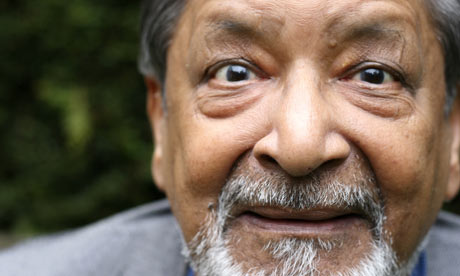
FBI buries VS Naipaul alive!

VS Naipaul

An FBI report has mistakenly declared the Nobel laureate dead

Eye-popping news ... VS Naipaul. Photograph: Eamonn McCabe

Reports of the death – and the degree of royal preferment – of Nobel laureate VS Naipaul have it seems been greatly exaggerated. A bizarre discovery by the website The Smoking Gun – the one which also uncovered James Frey's porkies – found that an FBI agent referred to "the late Lord VS Naipaul, a Nobel prize winning author" in court documents unsealed yesterday.

Now, Naipaul might not have published a new book since 2007's A Writer's People, or won a literary prize since he took the Nobel in 2001 for "having united perceptive narrative and incorruptible scrutiny in works that compel us to see the presence of suppressed histories", but he's still very much alive.

The FBI, rather confirming the estimation of a character in David Mamet's film Homicide that they "couldn't find Joe Louis in a bowl of rice", also – posthumously, as it were – elevated Sir Vidia to the House of Lords.

The poor man – it must be a very strange feeling to become a "late". One consolation, however, may be that he shares this profoundly uncomfortable experience with Alfred Nobel. Nobel, whose renown during his own lifetime rested on having invented dynamite, was profoundly shaken when a French newspaper rather precipitously declared that "le marchand de la mort est mort". After that trauma, the would-be pacifist's strategy for redeeming his name was to create a set of enormously generous prizes.

--

Alison Flood
Wednesday 28 October 2009
The Guardian

(c) Guardian News and Media Limited. 2009


Guy Fawkes Night, UK and New Zealand


Guy Fawkes Night (often referred to as Bonfire Night) is celebrated with bonfires and fireworks on November 5, or the closest Friday or Saturday night.

Until the nineteenth century there was a special Church of England service for this commemoration in the Book of Common Prayer. Guy Fawkes Day became a public holiday in 1606 when it was proclaimed by an Act of Parliament. In commemoration of the Gunpowder Plot on this day in 1605, when Guy Fawkes and his comrades tried to blow up King James I and the whole English Parliament, English people still burn a 'guy' in effigy.

Traditionally the guy's cap was made of paper and knotted with ribbon-like paper strips. The dummy carried matches in one hand and a dark lantern in the other. Children would go around the streets asking for money, saying “Please to remember the guy!” In 1850 in Britain there was a strong wave of anti-Catholic sentiment, and the guy was often in the likeness of the Catholic Archbishop of Westminster!

Happy Bonfire Night, England!


Saturday, August 15, 2009

Are you a fan of murder and mayhem in London?

Matt Fullerty's Facebook profile


Thursday, July 13, 2006

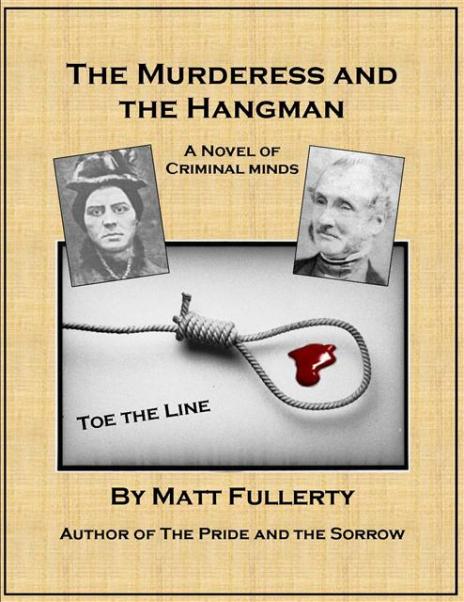
The Murderess and the Hangman

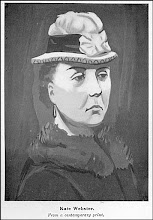
I am currently researching The Murderess and the Hangman, a novel about the famed but forgotten hangman William Marwood, inventor of 'the long drop' for ensuring a swift capital punishment, and the true-life story of murderess Kate Webster, hanged by Marwood in London for killing her landlady for a few pieces of furniture.

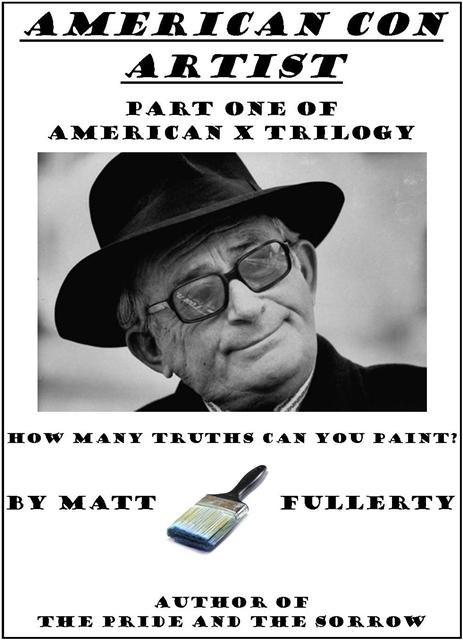
My novel about painting, criminality, and the greatest art forger of the twentieth century!

My novel about painting, criminality, and the greatest art forger of the twentieth century!
Please click the cover!

My novel about London, murder, mayhem, and a female killer!

My novel about London, murder, mayhem, and a female killer!
Please click the cover!

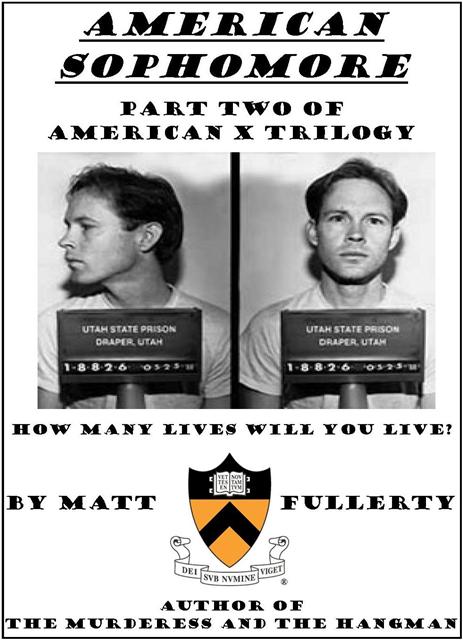
My novel about running, Princeton University, and a conman who lost it all!

My novel about running, Princeton University, and a conman who lost it all!
Please click the cover!

My novel about love, betrayal and chess in New Orleans

My novel about love, betrayal and chess in New Orleans
Please click the book!

My semi-autobiographical novel about a very British education and becoming an American!

My semi-autobiographical novel about a very British education and becoming an American!
Please click the cover!

My novel about London, murder, mayhem, and a female killer!

My novel about London, murder, mayhem, and a female killer!
Please click the cover!