My novel about love, betrayal and chess in New Orleans: The Pride and the Sorrow

Showing posts with label The Murderess and the Hangman. Show all posts

Friday, October 29, 2010

Crime Novel Becomes Reality for GW English Professor!

GW Professorial Lecturer in English Matt Fullerty, who is currently teaching ENGL 62 (Comedy) and ENGL 52W (English Literature), recently found himself in the middle of a national news story in the UK.

Last weekend, a human skull was dug up in the garden of broadcaster/naturalist Sir David Attenborough in London. It turns out to be the long-missing head of an 1879 murder victim named Martha Thomas, who was killed by her maid Kate Webster.

In a peculiar twist, Dr. Fullerty has been writing about the murder--in the form of a novel--for the past two years. After the murder, Kate impersonated Martha Thomas around London, wearing her clothes and jewelry, and selling her victim's belongings. After trying to flee to Ireland, Kate was arrested and put on trial at the Old Bailey, eventually confessing to her priest. She was hanged in Wandsworth Prison by the "royal hangman" William Marwood on 29 July, 1879.

When the story broke on Saturday in England, Matt became the go-to source for the British press. The result was a feature in Tuesday's Daily Mail about life of the killer (and the man who hanged her).

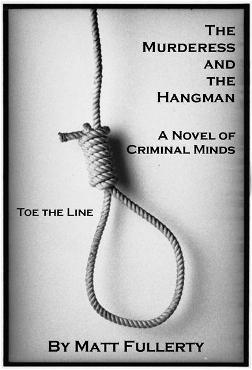
You can read more about Matt Fullerty's novel The Murderess and the Hangman here. Matt is currently looking for a publisher for his work, and we hope this strange turn-of-events will help him land a book deal in time for Halloween!

Tuesday, October 26, 2010

How a skull found in David Attenborough's garden has solved one of Victorian Britain's most gruesome murder mysteries

Attenborough

On a bright, spring morning, coal porter Henry Wheatley and his companion were driving their horse and cart along the Thames.

Shortly before seven o'clock, just before arriving at Barnes Bridge, South London, Wheatley noticed a wooden box lying half-submerged in the water.

He got down from his cart and, with some difficulty, hauled the box on to the bank. Noticing that it was tied with cord, Wheatley took out his knife and cut it open.

He then gave the box a kick and it collapsed. What he saw next turned his stomach. A mass of white flesh fell to the ground. At first, Wheatley's companion suggested they'd stumbled across a box of butcher's offcuts.


Workmen building an extension at the Richmond home of Sir David Attenborough unearthed a skull in the naturalist's garden. The police are almost certain it is that of Mrs Thomas, who was murdered 130 years ago
But Wheatley knew his find was far more grisly  -  in fact, he'd stumbled across the body parts of a dismembered woman. The date was March 5, 1879. Wheatley immediately reported his find to the police at Barnes.

A pathologist identified the body parts as belonging to a short, somewhat tubby woman.
The corpse had been cut up with an ordinary meat saw, and a contraction of flesh away from some of the bones suggested that the pieces had been boiled.

However, the body was missing not only a foot, but also something vital to help with identification  -  its head.
Five days later, another gruesome discovery was made  -  this time on a manure heap in an allotment in Twickenham, about five miles from Barnes. It was a box containing the missing foot, which had been boiled in the same way as the rest of the corpse.

For the next few days, the police could only guess as to the identity of the body  -  which some newspapers speculated could have been used by medical students for dissection.

However, by the end of the month and with help from a key witness, the police and the public learned the body belonged to a 50-year- old woman called Julia Martha Thomas, who lived in Richmond.

Kate Webster
Kate Webster - who murdered her elderly employer with an axe after she returned home from church on a Sunday evening

She had been murdered by her servant, a 30-year-old Irish woman called Katherine Webster.
Because of the gruesome nature of the corpse, the public were fascinated by the case. Some people even removed pebbles and twigs as souvenirs from the small garden of Mrs Thomas's cottage in Park Road, Richmond.

What was never discovered was Mrs Thomas's head. Its location remaining a secret  -  until last week, a full 130 years later.


On Friday, workmen building an extension at the Richmond home of Sir David Attenborough unearthed a skull in the naturalist's garden, and the police are almost certain it is that of Mrs Thomas.
Should this indeed be the case, then the final chapter of one of the most foul murders in Victorian London can now be written.

As a crime novelist, I've long been fascinated by the tale of the Richmond Murder  -  and I've even written a book based on the killing.

The murderer, Katherine Webster, was born in a small village in County Wexford in 1849. She spent her teenage years in and out of prison. At around the age of 17, she fled to Liverpool, where she lived as a drifter and furthered her skills as a burglar.

However, she soon found herself locked up and was sentenced to four years of penal servitude in 1867.
Released after three years, she made her way south to London, where she apparently attempted to make an honest living.

In 1873, she lodged in Rose Gardens, Hammersmith, West London, next to a family called the Porters, who would play a major part in her fate six years later.

Some time the following year, she gave birth to a son out of wedlock.

Unable to make ends meet Webster once more turned to thieving and, in 1875, she was sentenced to 18 months in London's Wandsworth prison for a staggering 36 offences of larceny.

As soon as she got out, she re-offended, and was locked up for another year in February 1877. In January 1879, she finally appeared to turn her back on a life of crime by taking a job as a servant for Mrs Thomas, at her home in Richmond.

Aged around 50, and recently widowed, Mrs Thomas was a small woman who took her religion seriously and was a devoted worshipper at the local Presbyterian chapel.

Unsurprisingly, the two women did not get along well. Mrs Thomas often had to reprimand her new servant for her violent temper and less than capable serving skills.

Builders unearthed a skull, believed to solve a 131-year-old riddle, in globe-trotter Sir David Attenborough's garden 
Gruesome: Builders unearthed a skull, believed to solve a 131-year-old riddle, in globe-trotter Sir David Attenborough's garden


On the evening of Sunday, March 2, Mr s Thomas returned from an evening service at the chapel. She found Webster had been drinking and a row ensued. The drunken servant girl was unable to contain herself and during the course of the argument she pushed her employer down the stairs.

She ran down after her, and seeing that Mrs Thomas appeared to be badly hurt, she decided to strangle her.
What happened next is like something out of a horror film. For the next 24 hours, Webster cut up the body of Mrs Thomas and boiled the pieces in a big copper pan.

Why she decided to boil the pieces is not clear, but it is likely she was hoping to disintegrate the flesh. She was unsuccessful and her attempts to burn the body parts also failed.

At this point , Katherine Webster decided that the only way to dispose of the body was to parcel it up and throw it in the Thames.

She placed the pieces in a box, and put the box into a large black bag. Then she assumed Mrs Thomas's identity.

On the late afternoon of Tuesday, March 4, she walked to her friends the Porters, whom she had not seen for months, and told them that she was now called Mrs Thomas and that her aunt had left her a house in Richmond.

Webster asked Mr Porter if he knew of an agent who could sell the house for her.

A little later, Webster, Mr Porter and his teenage son Robert went for a drink at a nearby pub. Robert carried the black bag, and it sat under the table while the three had ales.

Then Webster left  -  saying that she had to quickly see someone. When she returned, Porter saw that she no longer had the bag.

In fact, she had thrown it off Hammersmith Bridge.

Webster's greed knew no bounds. As well as trying to sell her victim's house, she also attempted to sell all its contents.

A man called John Church offered her £68 for some of the furniture, and she took £18 as a down-payment  -  insisting it be in cash or gold.

However, Webster was worried her crime would soon be discovered, and on or around March 18 she fled back to County Wexford.

Back in London, John Church began to grow suspicious and tracked down a friend of the real Mrs Thomas, who informed him that she was in fact in her 50s  -  and was most certainly not in her 30s with an Irish accent.
Church informed the police and, with evidence from Church and the Porters, they quickly put the puzzle together. On the 25th, Webster was arrested and detained at Clerkenwell prison.
At her trial that April, huge crowds thronged around the Central Criminal Court in London. Webster was found guilty, although she denied the murder.

She finally confessed the night before she was hanged at Wandsworth Prison on July 29.

What she never admitted was the location of Mrs Thomas's head, a secret which she took to her death at the end of the long rope.

Now, thanks to the unwitting help of Sir David Attenborough, the case can be finally closed.

Matt Fullerty's author site is www.mattfullerty.com

His novel based on the crime, THE MURDERESS AND THE HANGMAN, is currently with Watson, Little Ltd, and looking for a publisher. 

--


Monday, March 01, 2010

The Case of Amy Bishop: Violence that Art Didn't See Coming

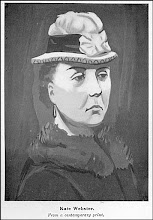
This is Kate Webster, female killer from my novel The Murderess and the Hangman. For more about the novel, please see my homepage here.

The following article from The New York Times deals with the role of female killers and art, particularly in light of the recent shootings by Amy Bishop, a professor at the University of Alabama.

--
When Ezra Pound declared in 1934 that “artists are the antennae of the race,” and Marshall McLuhan 30 years later called them people “of integral awareness,” both were using modern terms to update the ancient belief that works of the imagination might actually require a talent not only for invention but for attunement — for picking up signals already in the air. This is why the most forceful narratives and dramas seem less made up than distilled. They clarify events and experiences taken directly from the actual world.
Thus, the Jazz Age is better known through the fiction of F. Scott Fitzgerald, who captured its energies in real time, than through any number of retrospective studies. And the alienated teenager, that fixture of modern American life, didn’t fully exist until J. D. Salinger, with his faultless ear and attentive eye, coaxed him into being.
But every now and then, it seems, a gap is exposed. Events occur; art offers no guidance. The powers of imagination and attunement falter. Artists suffer a collective loss of awareness. “The culture” emits signals, but they are picked up only fitfully or are missed altogether.
Consider the case of Amy Bishop, the neuroscientist arrested for shooting six colleagues, killing three, at a department meeting at the University of Alabama in Huntsville. Rampages of this sort have become familiar. But with rare exceptions they have been the preserve of men: lonely, alienated psycho killers with arsenals of high-powered weapons and feverishly composed manifestos.
With remarkable suddenness Dr. Bishop has disrupted the pattern. When she reportedly discharged her 9-millimeter handgun, she also punctured longstanding assumptions, or illusions, about women and violence — particularly as a fuller picture of her past begins to emerge, much of it indicating a possible record of previous violent episodes, including the shooting death of her brother in 1986, and her suspected role in assembling a pipe bomb mailed to a faculty member at the Harvard Medical School in 1994, when Dr. Bishop was studying there.
It is not news that so-called senseless acts often unfold along the coordinates of an inner logic. This is what makes criminal violence so attractive a topic for artists and thinkers. The Western literary tradition, from Shakespeare to Dostoevsky, teems with pathologically violent men. Norman Mailer and Truman Capote wrote nonfiction masterpieces about them. They dominate the novels of Don DeLillo and Robert Stone, not to mention films by Sam Peckinpah, Francis Ford Coppola and Martin Scorsese.
But the landscape of unprovoked but premeditated female violence remains strangely unexplored. Women who kill are “relegated to an ‘exceptional case’ status that rests upon some exceptional, or untoward killing circumstance: the battered wife who kills her abusive husband; the postpartum psychotic mother who kills her newborn infant,” Candice Skrapec, a professor of criminology, noted in “The Female Serial Killer,” an essay included in the anthology “Moving Targets: Women, Murder and Representation” (1994).
Ms. Skrapec was writing at a time when Hollywood seemed preoccupied with women who commit crimes — in productions like “The Burning Bed,” the 1984 television film in which a battered wife finally sets her sleeping husband aflame, and “Thelma & Louise” (1991), in which a pair of women go on a outlaw spree after one of them is threatened with rape.
Both are essentially exculpatory parables of empowerment, anchored in feminist ideology. Their heroines originate as victims, pushed to criminal excesses by injustices done to them. The true aggressors are the men who mistreat and objectify them. So too with “Monster” (2003), in which Charlize Theron, in a virtuosic instance of empathy (and cosmetic makeover) re-enacted the story of Aileen Wuornos, a real-life prostitute who, after years of sexual abuse, began murdering her clients.
A decade or two ago this all made sense. The underworld of domestic abuse and sexual violence was coming freshly to light. And social arrangements were undergoing abrupt revision. The woman who achieved hard-won success in the workplace might well find herself, like the lonely stalker played by Glenn Close in “Fatal Attraction” (1987), tormented by the perfect-seeming family of the married man with whom she enjoys a weekend fling.
Much has changed since then, but the topic of women and violence — especially as represented by women — remains more or less in a time warp, bound by the themes of sexual and domestic trauma, just as male depictions of female violence are locked in the noir demimonde of fantasy, the slinky femmes fatales once played by Barbara Stanwyck and Lana Turner more or less duplicated by Kathleen Turner and Sharon Stone.
Put it another way. It is not hard to imagine Mr. DeLillo or Mr. Scorsese mapping the interior circuitry of Timothy McVeigh; Seung-Hui Cho, the Virginia Tech killer; or Bruce E. Ivins, the Army biodefense expert who, the F.B.I. concluded last week, committed anthrax terror in the aftermath of 9/11 — the paranoia, the lethal mix of fantasy and ruthless plotting. But what artist might do justice to Dr. Bishop and her complex story, as its details have so far been reported: the privileged upbringing; her stable marriage to a uxorious husband, who was also her collaborator on scientific inventions; their four children, some of whose homework Dr. Bishop is monitoring from her jail cell? And what of the accounts given by associates and neighbors of her personal qualities — assertive, bristling with sharp opinions, vocal on the subject of her brilliance, harboring fierce resentments?
The uncomfortable fact is that for all her singularity, Dr. Bishop also provides an index to the evolved status of women in 21st-century America. The number of female neurobiologists may still be small, but girls often outdo boys in the classroom, including in the sciences. (Mattel recently announced a new addition, Computer Engineer Barbie, to its line of popular dolls.) A Harvard Ph.D. remains a rare credential for women (as well as for men), but women now make up the majority of undergraduates at many prestigious colleges. And the tenure struggle said to have lighted Dr. Bishop’s short fuse reflects the anxieties of many other women who now outnumber men in the work force and have become, in thousands of cases, their family’s principal or only breadwinner.
These conditions have been developing for some years now. But the most advanced narratives of female violence seem uninterested in them. There is, for example, Marina Abramovic, a pioneer of performance art who will be honored in a major retrospective at the Museum of Modern Art in March, with 35 artists re-enacting five of her works. Ms. Abramovic, born in what was then Belgrade, Yugoslavia, first became a force in 1973 at the Edinburgh Festival, where she furiously stabbed a knife between her splayed fingers, bloodying 10 blades and tape recording the noises she made as she wounded herself. In 2002 Ms. Abramovic was still at it, exhibiting herself for 12 days in a downtown Manhattan installation, wordlessly moving among three raised platforms connected to the floor by ladders whose rungs were fashioned from large knives, their gleaming blades turned up.
There is also Karen Finley, whose avant-garde explorations of sexual violence put her in the middle of the federal arts-financing wars two decades ago. She is back onstage in “The Jackie Look.” Outfitted in bouffant and pearls, in imitation of Jacqueline Kennedy Onassis, Ms. Finley stands at a lectern and delivers a monologue on the female body — at one point shedding copious tears — and on the indignities ritually inflicted on public women (Michelle Obama no less than Mrs. Onassis).
All this is stimulating in its way, but it feels curiously outmoded. Although Ms. Abramovic and Ms. Finley are both charismatic presences, their antennae seem to have rusted. They persist in registering the dimmed signals of a bygone time.
For this reason, perhaps, the most useful glosses on Dr. Bishop may come from the world of popular, even pulpish, art — for instance, crowd-pleasing movies like “Black Widow,” “Blue Steel,” “The Silence of the Lambs,” Quentin Tarantino’s “Kill Bill” or even “Lost,” the ABC series. In all of them the hypothetical notion of empowerment gives way to the exercise of literal power. So too in crime novels written by women who specialize in the disordered or deranged mind. Genre art has its own limitations. But its strength is that it seeks to reanimate archetypes and is indifferent to ideological fashion.
“Everything is about power,” Patricia Cornwell, whose best-selling Scarpetta series is thick with forensic detail, maintained in an e-mail message, when asked what she made of the Bishop case. “The more women appropriate power, the more their behavior will mimic that of other powerful people.” Also: “Firearms are the great equalizer. You don’t have to be 6 foot 2 and weigh 200 pounds to kill a room full of people.”
Chelsea Cain, the author of a crime series that reverses the formula of “The Silence of the Lambs,” pitting a male detective against a female serial killer, suggested that Dr. Bishop is the latest version of an ancient figure, “the mother lioness that kills to protect herself and her family against perceived threats.”
In fact two middle-aged classics of genre literature eerily prefigure aspects of the Bishop case. In William March’s 1954 novel “The Bad Seed,” later adapted for both stage and film, an 8-year-old girl viciously murders a classmate but is protected by her mother, only to kill again. This parallels the allegations in Dr. Bishop’s case, at least according to the resurfaced police report on the death of her brother nearly a quarter-century ago.
No genre writer had sharper antennae than Shirley Jackson, whose gothic classic, “We Have Always Lived in the Castle,” first published in 1962, was reissued last fall. Its narrator is an 18-year-old multiple murderess who lives with her devoted sister and fantasizes about killing again. She is “socially maladroit, highly self-conscious, and disdainful of others,” Joyce Carol Oates wrote in a penetrating essay recently in The New York Review of Books. “She is ‘special.’ ” Words that ring ominously in the context of Dr. Bishop.
Ms. Oates, of course, has examined violence as thoroughly as any living American writer. When I asked her what she made of the case, she drew an implicit comparison between Dr. Bishop and Shirley Jackson’s narrator: “She is a sociopath and has been enabled through her life by individuals around her who shielded her from punishment.”
Ms. Oates’s feminist credentials are in good order. But her assessment comes from beyond the realm of predigested doctrine. It echoes the blunt assertion made by Ms. Cornwell: “People kill because they can. Women can be just as violent as men.”
--
Sam Tanenhaus, The New York Times, February 24, 2010

Tuesday, September 15, 2009

Driven to kill - law to change for women who kill violent husbands!

Julie Bindel
Friday June 26 2009
The Guardian
---
During her relationship with her husband, Malcolm, Sara Thornton endured repeated beatings. She sought help from numerous agencies, called the police repeatedly and her husband was eventually charged with assault. But he died before his court appearance. As he lay drunk on the sofa one night in June 1989, she stabbed him to death. The following year she was convicted of murder and given a life sentence by a judge who said she could have simply "walked out or gone upstairs".

Thornton became a cause celebre for feminists campaigning against domestic violence. At the time, as the judge's comments made clear, little was known about what drives a battered woman to kill her abuser. Thornton appealed against her conviction, arguing that she killed as a result of "slow burn" provocation. She lost.

Two days later, Joseph McGrail killed his common-law wife, as she lay drunk, by kicking her repeatedly in the stomach. He was given a two-year suspended sentence for manslaughter and walked free. The judge expressed "every sympathy" for McGrail, adding "this lady would have tried the patience of a saint".

In response to the glaring discrepancy in treatment, the feminist law reform campaign Justice for Women (JfW) was born in 1991.

Men commit almost 90% of domestic homicides, and the victims are their female partners - who have often been previously battered by their killers. On average, two women die every week as a result of domestic violence. For men who kill their partners, the defence of provocation is tailor-made. Provocation will reduce a charge of murder to manslaughter if the defendant can show that things were said or done to provoke them, causing them to experience a sudden loss of control. In such cases they will often justify their actions by claiming that they "just snapped" or "saw red". Judges have been known to express sympathy for men who claim they were nagged or cheated on by female partners, but often appear to have little for women who kill after being raped by their partners or experiencing domestic violence. This tends to be because when women who are being regularly beaten by their partners kill, their dominant emotions are usually fear or despair - not exactly a sudden, explosive "loss of self-control".

After 20 years of feminist campaigning, however, the law is about to change. Next week, a new bill will be debated in the House of Lords which contains a clause that proposes abolishing the defence of provocation and replacing it with a partial defence that relies upon evidence that the defendant killed out of a fear of serious violence or a "justifiable sense of being seriously wronged".

Thornton's story had a happy ending. She finally won a second appeal and was acquitted of murder in 1995. But the change in the law comes too late for the estimated 70 women currently in prison for killing a violent partner. These are just three of them:Sharon Akers

Sharon Akers is serving a life sentence for murder. She endured six years of abuse and humiliation from her partner, Nick Doolan, before snapping and killing him. They met in 1998, shortly after her divorce from the father of her two young sons. Doolan was good-looking and popular, and Akers was flattered by his attention. "Sharon was obsessed with Nick," says one of her close relatives. "She genuinely loved him." As their relationship progressed, Doolan chipped away at Akers' confidence. She gradually became emotionally dependent on him, and felt unable to challenge the verbal, sexual and physical abuse that Doolan meted out to her. He had a history of violence. Having been jailed for grievous bodily harm against a neighbour,he was on bail for an assault on Akers when he died, and had been arrested on other occasions for assaulting her.

While he was in prison Doolan still managed to control Akers. If she missed a phone call from him he would accuse her of being unfaithful. During the six years she was with him Akers attempted suicide nine times.

Doolan invited his friends to his house to have sex with Akers, reprimanding her when she said no. And although she left him several times, she always went back to him. "I lost all my self-confidence," says Akers, "and felt unable to function without him." The last straw was when Doolan claimed he had slept with her mother. Although it was a lie and her mother denied it, Akers became paranoid.

On the day she killed Doolan, in October 2003, she had been drinking heavily in her local pub, becoming increasingly distressed. Doolan had been sending abusive and threatening text messages. "I called my mother and said, 'I can't take any more. Nick has ruined my life,'" said Akers. She decided to confront Doolan, and drove to his home, taking a knife with her for protection. When Doolan opened the door she stabbed him. "I was convinced he was going to kill me," she says. Although Doolan did not attack her on that occasion, his abuse and threats had terrified her. Akers is full of remorse. "I did not mean to kill him. I just wanted him to stop tormenting me and my family."

She lost her appeal against her murder conviction in 2007 and her earliest release date has been set for 2015.Alicia Crown

Alicia Crown (not her real name) has been in prison for more than eight years. Her tariff was originally nine years, but was reduced to seven and a half in 2006 to reflect the evidence of violence and abuse that led her to kill. For Crown the stigma of being labelled a murderer brings an added burden. Recently she has lost her appeal against deportation to Jamaica, a country she had escaped because her life was in danger from a violent ex-partner as well as the ghetto violence that had led to her brother being murdered.

Crown met Andrew Semple shortly after arriving in the UK in 2000 while working in a club, and moved in with him. But Semple soon became possessive, violent and controlling, often threatening to report Crown to immigration for overstaying her visa. Sometimes he would punch her when she was least expecting it, and he once threatened to push her under a train. In March 2000 Crown moved out and the relationship seemed to improve for a while, continuing on a more casual basis, but Semple remained jealous.

In May that year, Semple asked Crown if they could meet and sort out some problems in their relationship. When Crown arrived she could tell Semple had been drinking. He noticed Crown had a sore on her lip and accused her of having syphilis. In the ensuing argument, Semple started punching her in the face and threatening her with a fruit knife. Crown grabbed the knife when Semple dropped it and stabbed him during a struggle, running barefoot and injured from the scene, crying for help.

The flat revealed evidence of a struggle between the two, and a police doctor who examined Crown two days later found injuries partly consistent with her account of having been attacked by Semple. Crown pleaded self-defence at her trial, but the jury convicted her of murder. Following her conviction, the judge said the evidence suggested she may well have killed in "excessive self-defence".

In law, the force used in self-defence must be equal to the threat and there should be no obvious means of escape. But the reality is that in a typical domestic violence relationship, where one partner is physically stronger and more confident in the use of violence, the victim may have an exaggerated fear of the danger. In cases where women kill, a knife is often used to defend against a fist, and sometimes a woman may kill to prevent a further attack.

At Crown's appeal it was accepted that she had experienced a lifetime of abuse and violence when growing up in Jamaica. However the argument by her defence that she could claim diminished responsibility due to having post-traumatic stress disorder at the time she killed Semple failed. Crown was described as "remarkably resilient".

Marai Larasi, an expert in domestic violence and Jamaican women, wrote a report for the court about the often racist stereotyping of black women who suffer male violence. "[The] failure to look beyond Ms Crown's 'resilient' exterior is not unfamiliar ... In my experience black women are particularly susceptible to being viewed as 'strong', able to cope and somehow not vulnerable."

Recently Crown was moved out of open prison back to jail as a result of her pending deportation. She continues to challenge the court's verdict as well as the prison move.Kirsty Scamp

Kirsty Scamp stabbed her boyfriend Jason Bull to death on his 28th birthday. She had been reluctant to go out to celebrate with him because she was wary of his heavy drinking and cocaine use, which often led to violence.

"I had made him a birthday cake and wanted it to be a special day and not the usual drunken display, " she says. But on Bull's insistence, the couple went out in the late afternoon to meet friends in a pub. Bull drank heavily and took cocaine. When they returned home they started to argue, and when Scamp tried to stop him from drinking more, Bull began punching her and pulled out clumps of her hair. She left the flat to let him calm down, and sat on the steps outside the front door. She then overheard him on the phone "slagging me off" and went back in to confront him.

At that point, Scamp says, he turned "really nasty". She said she "had never seen him look the way he did that night. It was frightening." She grabbed a knife and stabbed Bull in the chest. "I ran out into the street and called an ambulance," said Scamp. "He was slumped against the door, and there was lots of blood, but I had no idea he was so seriously hurt."

While she was awaiting trial the prosecution barrister offered her a deal - the Crown would drop the murder charge if she pleaded guilty to manslaughter. Scamp rejected this. She felt she had acted in self-defence. "I don't remember killing him but I suppose I must have done," she wrote in a letter from Holloway prison. "I just know I was scared he would kill me."

Like most women jailed for murder, Scamp says she loved the man she killed. She said she had tried to help him break out of his increasingly frightening behaviour; Bull suffered from mental health problems and regularly erupted into drink- or drug-fuelled violence. During the relationship he repeatedly attacked her. The penultimate assault gave Scamp a perforated eardrum, and he was on bail for this offence when he died. Bull had also assaulted previous girlfriends, some of whom testified at her trial.

Scamp had grown up with domestic violence and spent time as a child living in refuges with her mother. While with Bull she was working in a care home for vulnerable adults with behavioural difficulties. After four days of deliberation the jury returned a majority verdict that found her guilty of murder. The judge told her she must serve at least 12 years.

The judge commented to the jury that Scamp should have been able to tolerate Bull's erratic outbursts because of her experience at work. "How dare he?" says Scamp. "My work has nothing to do with what I can or cannot put up with in my personal life. Those residents were not controlling or beating me like he was."

Scamp is now in Holloway prison, hoping that her new legal team will find grounds to appeal against her conviction. "Being life'd off is a nightmare," she says, "but I know I am not a murderer".

--
guardian.co.uk Copyright (c) Guardian News and Media Limited. 2009


Monday, August 31, 2009

The Murderess and the Hangman - will she escape the hangman?


Wednesday, August 12, 2009

Kate Webster - London murderess! - did she do it?

Kate Webster on Facebook


Thursday, August 24, 2006

New Site (If You Like Chess and Murder)

Check out Matt Fullerty's new website and novel The Pride and the Sorrow about the life of chess world champion Paul Morphy at www.mattfullerty.com


Sunday, August 20, 2006

Matt Fullerty - author fan site!

Matt Fullerty on Facebook


Thursday, July 13, 2006

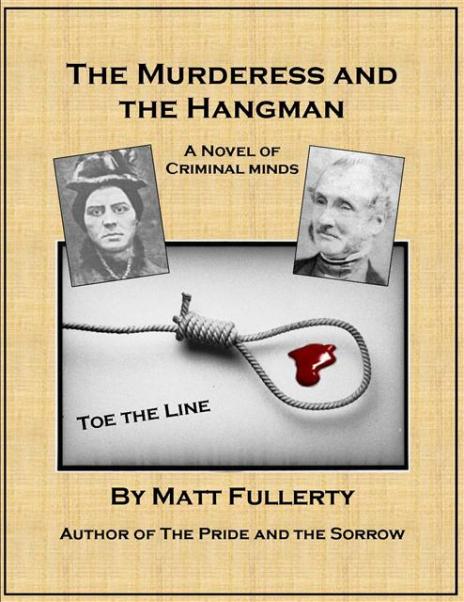
The Murderess and the Hangman

I am currently researching The Murderess and the Hangman, a novel about the famed but forgotten hangman William Marwood, inventor of 'the long drop' for ensuring a swift capital punishment, and the true-life story of murderess Kate Webster, hanged by Marwood in London for killing her landlady for a few pieces of furniture.

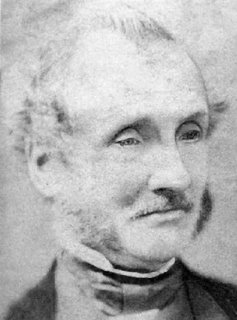
Mugshots: executioner

This is William Marwood, looking worn and sad. His eyes are very odd, ghostly, one strangely inert and the other eerily cruel. A man of science, he spent his career as exeuctioner trying to quicken the 'dance of death' at the end of his hangman's rope.

Mugshots: killer

This is Kate Webster, looking both proud and mournful, and frightening.

The Long Drop

This is the gallows at Wandsworth Prison, London, similar to the ones used to execute Kate Webster in 1879. Note the nearby lever to activate the 'long drop.' The room was a self-enclosed execution chamber, and portable. It was known affectionately as "The Cold Meat Shed."

My novel about painting, criminality, and the greatest art forger of the twentieth century!

My novel about painting, criminality, and the greatest art forger of the twentieth century!
Please click the cover!

My novel about London, murder, mayhem, and a female killer!

My novel about London, murder, mayhem, and a female killer!
Please click the cover!

My novel about running, Princeton University, and a conman who lost it all!

My novel about running, Princeton University, and a conman who lost it all!
Please click the cover!

My novel about love, betrayal and chess in New Orleans

My novel about love, betrayal and chess in New Orleans
Please click the book!

My semi-autobiographical novel about a very British education and becoming an American!

My semi-autobiographical novel about a very British education and becoming an American!
Please click the cover!

My novel about London, murder, mayhem, and a female killer!

My novel about London, murder, mayhem, and a female killer!
Please click the cover!