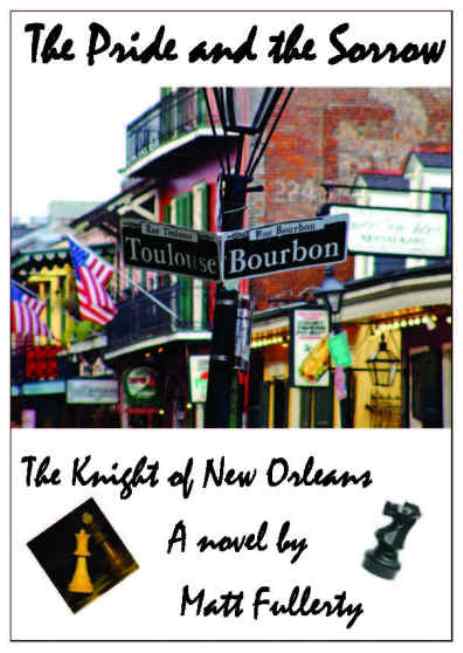
My novel about love, betrayal and chess in New Orleans: The Pride and the Sorrow

Thursday, September 17, 2009

A brief survey of the short story: who was Saki?


Chris Power
Monday September 14 2009
The Guardian
--
What a strange bird Saki is. His stories, written between 1900 and his death at the Somme in 1916, bear the hallmarks of Oscar Wilde and Henry James, are as funny as Wilde, Wodehouse and Waugh, possess plotting exquisite enough to bear significant elaboration but rarely last longer than three pages, and are brought off with a wonderfully light touch, while presenting a disturbingly chilling portrait of humankind.

Hector Hugh Munro's pen-name refers either to the cupbearer in the Rubáiyát of Omar Khayyam, which is spoken of disparagingly in more than one of his stories, or a type of South American monkey. I prefer to think it was the latter: not only did Saki have an abiding love for animals, but his mischievousness and capability for sudden viciousness are traits that seem, at least to my limited zoological knowledge, eminently monkey-like.

Saki's stories form a connective tissue between Oscar Wilde's 1890s and Evelyn Waugh's 1920s. His settings - garden parties, country house weekends and gentlemen's clubs - are typically Edwardian, but their wit, polished to a stunning brilliance, is underpinned by a satirical urge that is pitiless, and at times seemingly malicious.

Indeed, if Saki's talents for humour and plotting weren't so pronounced his fiction's procession of vapid hostesses, venal politicians, sour endings, macabre incidents and the blithely murderous could potentially make for a dismal repast. Instead, the world he renders is at once horrific, recognisably our own and yet for the most part a thoroughly enjoyable - or at least stimulating - one in which to linger.

What both appeals and repels in Saki's writing is his utter and absolute lack of sentiment, which makes his skewering of society thrillingly acerbic. But the feeling one has when reading the stories is that his characters are as nothing to him. If they do receive some sort of esteem from the author it's primarily because they prove themselves adept at exploiting the weaknesses of others. There are many arch and satirical writers in English letters, but few of them are as relentlessly cold as Saki.

After a short time spent as a policeman in Burma (footsteps in which George Orwell would later follow) and the publication of a history of Russia that no one read, Saki turned to fiction in 1900 with a series lampooning Westminster politicians (a habit he happily never grew out of). While his stories cover a wide range of subjects and styles, the two characters to whom he most often returns are Reginald, a controversy-loving, foppish libertine, and Clovis, a slightly more fleshed out variation on the theme.

These two characters and their companions, particularly Bertie van Tahn, whom you could easily imagine having just come from lunch with Bertie Wooster whenever he crosses the path of Clovis, operate in the Wodehousian mode. Through boredom they generate scrapes, or help others escape scrapes, and in the process some element of polite society or public morality is shown to be ludicrous.

It should be noted that Jeeves and Wooster didn't make their debut until 1917, the year after a sniper's bullet put an end to Munro in a shell crater, but to call Wodehouse's creations "Sakian" would, for reasons of reputation and literary fame, be perverse. There's every reason for Saki devotees to believe this might change, however. Firstly because anyone who loves Wodehouse and hasn't read Saki is missing a trick, and secondly because, as Will Self noted in a 2007 documentary, "Saki's stories are highly relevant to any society in which convention is confused with morality, and all societies confuse convention with morality, so he'll always be relevant."

Another thing that recommends Saki to the modern reader and perhaps explains why he remains somewhat obscure is his ability to shock. Nestling in the gloomier crevices of his work are macabre pieces the horror of which the century since their composition has done nothing to dilute. Some take straightforward domestic shape, such as The Reticence of Lady Anne, in which a put-upon husband tries to patch up an argument with his wife, not realising that she is sitting in stony silence because she is dead. Others, including the pagan-themed The Music on the Hill, appear to take their cues from Munro's near contemporary MR James.

Even when Saki is not writing explicitly "horrific" stories, however, the unease is present. His stories are more subtle variations on what William Burroughs, writing of Naked Lunch, described as the "frozen moment when everyone sees what is on the end of every fork". Or as VS Pritchett put it, "Saki writes like an enemy. Society has bored him to the point of murder. Our laughter is only a note or two short of a scream of fear."

--

guardian.co.uk Copyright (c) Guardian News and Media Limited. 2009


The top 10 Agatha Christie mysteries!


John Curran
Wednesday September 16 2009
The Guardian
--
John Curran, a lifelong Christie fan, lives in Dublin. For many years he edited the official Agatha Christie Newsletter and acted as a consultant to the National Trust during the restoration of Greenway House, Dame Agatha's Devon home. His first book, Agatha Christie's Secret Notebooks, which explores the contents of 73 hitherto unseen journals, has just been published.

Buy Agatha Christie's Secret Notebooks at the Guardian bookshop

"Agatha Christie was the greatest exponent of the classical detective story. Her unique literary talents have crossed every boundary of age, race, class, geography and education. While she refined the template for a fictional form, the reading of her books became an international pastime. As we celebrate her 120th birthday these are my highlights of her literary career."1.

  • 1. The Murder of Roger Ackroyd (1926)

Hercule Poirot has retired to the village of King's Abbot to cultivate marrows. But when wealthy Roger Ackroyd is found stabbed in his study, he agrees to investigate. A typical village murder mystery; or so it seems until the last chapter with its stunning revelation. This title would still be discussed today even if Christie had never written another book. An unmissable, and still controversial, milestone of detective fiction.

  • 2. Peril at End House (1932)

The impoverished owner of End House hosts a party where fireworks camouflage the shot that kills her cousin. Which of the other guests is a murderer? Perfectly paced, with subtle and ingenious clueing, and an unexpected but totally logical solution. Of its type, perfection; this is how the classic detective story should be written.

  • 3. Murder on the Orient Express (1934)

The glamorous Orient Express stops during the night, blocked by snowdrifts. Next morning the mysterious Mr. Ratchett is found stabbed in his compartment and untrodden snow shows that the killer is still on board. This glamorous era of train travel provides Poirot with an international cast of suspects and one of his biggest challenges. Predicated on an inspired gimmick, this is one of the great surprise endings in the genre.

  • 4. The ABC Murders (1935)

Despite advance warnings, Poirot is unable to prevent the murders of Alice Ascher, Betty Barnard and Carmichael Clarke. Can he stop the ABC Killer before he reaches D? One of the earliest examples of the "serial killer" novel this classic Christie is based on a beautifully simple premise. But how many readers are as clever as Poirot?

  • 5. And Then There Were None (1939)

Ten people are invited to an island for the weekend. Although they all harbour a secret, they remain unsuspecting until they begin to die, one by one, until eventually ? there are none. Panic ensues when the diminishing group realises that one of their own number is the killer. A perfect combination of thriller and detective story, this much-copied plot is Christie's greatest technical achievement.

  • 6. Five Little Pigs (1943)

Sixteen years ago, Caroline Crale died in prison while serving a life sentence for poisoning her husband. Her daughter asks Poirot to investigate a possible miscarriage of justice and he approaches the other five suspects. This sublime novel is a subtle and ingenious detective story, an elegiac love story and a masterful example of storytelling technique, with five separate accounts of one devastating event. Christie's greatest achievement.

  • 7. Crooked House (1949)

The Leonides family all live together in a not-so-little crooked house. But which of them poisoned the patriarch, Aristides? Murder in the extended family always provided fertile ground for Christie, and this was one of her own favourites. Another example of a sinister reinterpretation of a nursery rhyme with an ending that her publishers initially considered too shocking, even for Agatha Christie.

  • 8. A Murder is Announced (1950)

In the village of Chipping Cleghorn, a murder is announced in the local paper's small ads. As Miss Blacklock's friends gather for what they fondly imagine will be a parlour game, an elaborate murder plot is set in motion. This was Christie's 50th title and remains Miss Marple's finest hour. Notable also for its setting in post-war Britain (a factor vital to the plot) this is arguably the last of the ingeniously clued and perfectly paced Christies.

  • 9. Endless Night (1967)

Working-class Michael Rogers tells the story of his meeting and marrying Ellie, a fantastically rich American heiress. As they settle in their dream house in the country, it becomes clear that not everyone is happy for them. A very atypical Christie, this tale of menacing suspense builds to a horrific climax and shows that even after 45 years she had not lost the power to confound her readers. The best novel from her last 20 years.

  • 10. Curtain: Poirot's Last Case (1975, but written during the second world war)

An old and frail Poirot returns to the scene of his first case, the country house Styles, now a guest-house. He summons his friend Hastings to help identify the killer he suspects is a fellow-guest. Christie uses every trick in the book to produce a unforgettable, yet poignant, swan song for the little Belgian. This novel was written during the Blitz and stored in a safe to be published after Christie's own death. It was actually published in October 1975 (Christie died in January 1976) and Poirot received a front-page obituary in the New York Times. In a lifetime of literary tours-de-force, this is the biggest shock of all.

--

guardian.co.uk Copyright (c) Guardian News and Media Limited. 2009


Tuesday, September 15, 2009

Driven to kill - law to change for women who kill violent husbands!

Julie Bindel
Friday June 26 2009
The Guardian
---
During her relationship with her husband, Malcolm, Sara Thornton endured repeated beatings. She sought help from numerous agencies, called the police repeatedly and her husband was eventually charged with assault. But he died before his court appearance. As he lay drunk on the sofa one night in June 1989, she stabbed him to death. The following year she was convicted of murder and given a life sentence by a judge who said she could have simply "walked out or gone upstairs".

Thornton became a cause celebre for feminists campaigning against domestic violence. At the time, as the judge's comments made clear, little was known about what drives a battered woman to kill her abuser. Thornton appealed against her conviction, arguing that she killed as a result of "slow burn" provocation. She lost.

Two days later, Joseph McGrail killed his common-law wife, as she lay drunk, by kicking her repeatedly in the stomach. He was given a two-year suspended sentence for manslaughter and walked free. The judge expressed "every sympathy" for McGrail, adding "this lady would have tried the patience of a saint".

In response to the glaring discrepancy in treatment, the feminist law reform campaign Justice for Women (JfW) was born in 1991.

Men commit almost 90% of domestic homicides, and the victims are their female partners - who have often been previously battered by their killers. On average, two women die every week as a result of domestic violence. For men who kill their partners, the defence of provocation is tailor-made. Provocation will reduce a charge of murder to manslaughter if the defendant can show that things were said or done to provoke them, causing them to experience a sudden loss of control. In such cases they will often justify their actions by claiming that they "just snapped" or "saw red". Judges have been known to express sympathy for men who claim they were nagged or cheated on by female partners, but often appear to have little for women who kill after being raped by their partners or experiencing domestic violence. This tends to be because when women who are being regularly beaten by their partners kill, their dominant emotions are usually fear or despair - not exactly a sudden, explosive "loss of self-control".

After 20 years of feminist campaigning, however, the law is about to change. Next week, a new bill will be debated in the House of Lords which contains a clause that proposes abolishing the defence of provocation and replacing it with a partial defence that relies upon evidence that the defendant killed out of a fear of serious violence or a "justifiable sense of being seriously wronged".

Thornton's story had a happy ending. She finally won a second appeal and was acquitted of murder in 1995. But the change in the law comes too late for the estimated 70 women currently in prison for killing a violent partner. These are just three of them:Sharon Akers

Sharon Akers is serving a life sentence for murder. She endured six years of abuse and humiliation from her partner, Nick Doolan, before snapping and killing him. They met in 1998, shortly after her divorce from the father of her two young sons. Doolan was good-looking and popular, and Akers was flattered by his attention. "Sharon was obsessed with Nick," says one of her close relatives. "She genuinely loved him." As their relationship progressed, Doolan chipped away at Akers' confidence. She gradually became emotionally dependent on him, and felt unable to challenge the verbal, sexual and physical abuse that Doolan meted out to her. He had a history of violence. Having been jailed for grievous bodily harm against a neighbour,he was on bail for an assault on Akers when he died, and had been arrested on other occasions for assaulting her.

While he was in prison Doolan still managed to control Akers. If she missed a phone call from him he would accuse her of being unfaithful. During the six years she was with him Akers attempted suicide nine times.

Doolan invited his friends to his house to have sex with Akers, reprimanding her when she said no. And although she left him several times, she always went back to him. "I lost all my self-confidence," says Akers, "and felt unable to function without him." The last straw was when Doolan claimed he had slept with her mother. Although it was a lie and her mother denied it, Akers became paranoid.

On the day she killed Doolan, in October 2003, she had been drinking heavily in her local pub, becoming increasingly distressed. Doolan had been sending abusive and threatening text messages. "I called my mother and said, 'I can't take any more. Nick has ruined my life,'" said Akers. She decided to confront Doolan, and drove to his home, taking a knife with her for protection. When Doolan opened the door she stabbed him. "I was convinced he was going to kill me," she says. Although Doolan did not attack her on that occasion, his abuse and threats had terrified her. Akers is full of remorse. "I did not mean to kill him. I just wanted him to stop tormenting me and my family."

She lost her appeal against her murder conviction in 2007 and her earliest release date has been set for 2015.Alicia Crown

Alicia Crown (not her real name) has been in prison for more than eight years. Her tariff was originally nine years, but was reduced to seven and a half in 2006 to reflect the evidence of violence and abuse that led her to kill. For Crown the stigma of being labelled a murderer brings an added burden. Recently she has lost her appeal against deportation to Jamaica, a country she had escaped because her life was in danger from a violent ex-partner as well as the ghetto violence that had led to her brother being murdered.

Crown met Andrew Semple shortly after arriving in the UK in 2000 while working in a club, and moved in with him. But Semple soon became possessive, violent and controlling, often threatening to report Crown to immigration for overstaying her visa. Sometimes he would punch her when she was least expecting it, and he once threatened to push her under a train. In March 2000 Crown moved out and the relationship seemed to improve for a while, continuing on a more casual basis, but Semple remained jealous.

In May that year, Semple asked Crown if they could meet and sort out some problems in their relationship. When Crown arrived she could tell Semple had been drinking. He noticed Crown had a sore on her lip and accused her of having syphilis. In the ensuing argument, Semple started punching her in the face and threatening her with a fruit knife. Crown grabbed the knife when Semple dropped it and stabbed him during a struggle, running barefoot and injured from the scene, crying for help.

The flat revealed evidence of a struggle between the two, and a police doctor who examined Crown two days later found injuries partly consistent with her account of having been attacked by Semple. Crown pleaded self-defence at her trial, but the jury convicted her of murder. Following her conviction, the judge said the evidence suggested she may well have killed in "excessive self-defence".

In law, the force used in self-defence must be equal to the threat and there should be no obvious means of escape. But the reality is that in a typical domestic violence relationship, where one partner is physically stronger and more confident in the use of violence, the victim may have an exaggerated fear of the danger. In cases where women kill, a knife is often used to defend against a fist, and sometimes a woman may kill to prevent a further attack.

At Crown's appeal it was accepted that she had experienced a lifetime of abuse and violence when growing up in Jamaica. However the argument by her defence that she could claim diminished responsibility due to having post-traumatic stress disorder at the time she killed Semple failed. Crown was described as "remarkably resilient".

Marai Larasi, an expert in domestic violence and Jamaican women, wrote a report for the court about the often racist stereotyping of black women who suffer male violence. "[The] failure to look beyond Ms Crown's 'resilient' exterior is not unfamiliar ... In my experience black women are particularly susceptible to being viewed as 'strong', able to cope and somehow not vulnerable."

Recently Crown was moved out of open prison back to jail as a result of her pending deportation. She continues to challenge the court's verdict as well as the prison move.Kirsty Scamp

Kirsty Scamp stabbed her boyfriend Jason Bull to death on his 28th birthday. She had been reluctant to go out to celebrate with him because she was wary of his heavy drinking and cocaine use, which often led to violence.

"I had made him a birthday cake and wanted it to be a special day and not the usual drunken display, " she says. But on Bull's insistence, the couple went out in the late afternoon to meet friends in a pub. Bull drank heavily and took cocaine. When they returned home they started to argue, and when Scamp tried to stop him from drinking more, Bull began punching her and pulled out clumps of her hair. She left the flat to let him calm down, and sat on the steps outside the front door. She then overheard him on the phone "slagging me off" and went back in to confront him.

At that point, Scamp says, he turned "really nasty". She said she "had never seen him look the way he did that night. It was frightening." She grabbed a knife and stabbed Bull in the chest. "I ran out into the street and called an ambulance," said Scamp. "He was slumped against the door, and there was lots of blood, but I had no idea he was so seriously hurt."

While she was awaiting trial the prosecution barrister offered her a deal - the Crown would drop the murder charge if she pleaded guilty to manslaughter. Scamp rejected this. She felt she had acted in self-defence. "I don't remember killing him but I suppose I must have done," she wrote in a letter from Holloway prison. "I just know I was scared he would kill me."

Like most women jailed for murder, Scamp says she loved the man she killed. She said she had tried to help him break out of his increasingly frightening behaviour; Bull suffered from mental health problems and regularly erupted into drink- or drug-fuelled violence. During the relationship he repeatedly attacked her. The penultimate assault gave Scamp a perforated eardrum, and he was on bail for this offence when he died. Bull had also assaulted previous girlfriends, some of whom testified at her trial.

Scamp had grown up with domestic violence and spent time as a child living in refuges with her mother. While with Bull she was working in a care home for vulnerable adults with behavioural difficulties. After four days of deliberation the jury returned a majority verdict that found her guilty of murder. The judge told her she must serve at least 12 years.

The judge commented to the jury that Scamp should have been able to tolerate Bull's erratic outbursts because of her experience at work. "How dare he?" says Scamp. "My work has nothing to do with what I can or cannot put up with in my personal life. Those residents were not controlling or beating me like he was."

Scamp is now in Holloway prison, hoping that her new legal team will find grounds to appeal against her conviction. "Being life'd off is a nightmare," she says, "but I know I am not a murderer".

--
guardian.co.uk Copyright (c) Guardian News and Media Limited. 2009


Thursday, September 10, 2009

Paul Morphy, Chess Player, World Champion!


Friday, September 04, 2009

The Ten Commandments of Blogging

Published in Pimp My Novel: September 3, 2009
--
1. I am thy blog. If you're an author, you should already have a blog. If you're not yet published, now is the time to start.

2. Thou shalt have no other blogs before me. We all love reading blogs—we wouldn't be here if we didn't—but yours comes first. Write your own posts before you spend all afternoon reading someone else's.

3. Thou shalt not make of thyself an idol. Keep your ego in check; you always want to portray yourself positively in your blog. Your reputation is all you've got in this business, and if you earn yourself one as a likable person as well as a great writer, you're a golden calf.

4. Remember thy Schedule and keep it, wholly. You don't have to write a post every day, but keeping a regular schedule is a courtesy and a sort of unwritten contract between you and your readers; they'll know when to expect new content and will come to appreciate and respect you for that.

5. Thou shalt honor thy agent and thy publisher. You couldn't have done this without them. Give props where props are due.

6. Thou shalt not commit character assassination. Everyone has authors or critics they don't like, sometimes personally. Don't pull an Alice Hoffman. And, I guess, don't try to kill anyone in real life, either.

7. Thou shalt not commit adultery, but thou shalt pimp thyself. No one sells you like you do. Facebook, Twitter, &c. The more pervasive your presence, the more likely it is that people will buy your book.

8. Thou shalt not plagiarize. Always quote. Always cite your sources. Always link back to them if they're on-line.

9. Thou shalt not deceive thy audience. Never post anything you don't believe is true, and be sure to provide links to any research you've done. Always be sure to clarify whether a point you're making is an opinion or a fact.

10. Thou shalt monetize. I don't do it because I don't consider blogging a part of my livelihood, but you, as authors, should consider self-promotion as part of the job. Let Google or whomever run a few relevant ads on your blog and make a little cash on the side. (Unless you've got a large readership, though, it probably won't be much.)
---
Copyright 2009 Pimp My Novel


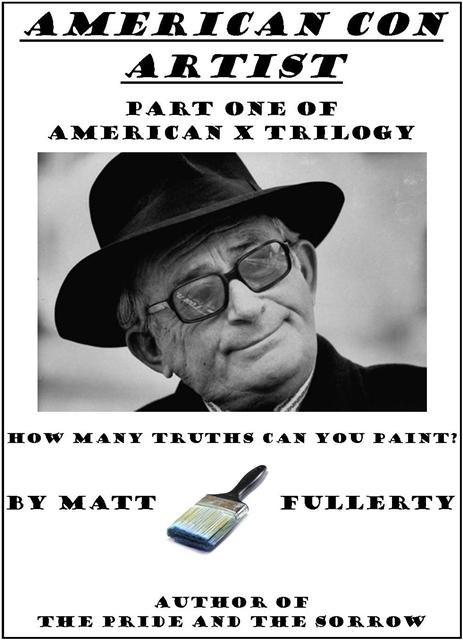
My novel about painting, criminality, and the greatest art forger of the twentieth century!

My novel about painting, criminality, and the greatest art forger of the twentieth century!
Please click the cover!

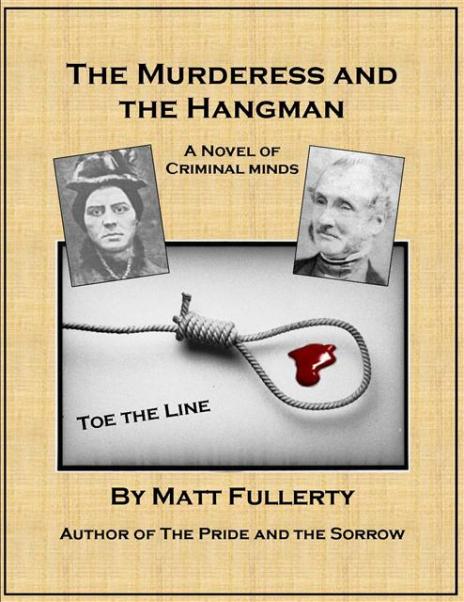
My novel about London, murder, mayhem, and a female killer!

My novel about London, murder, mayhem, and a female killer!
Please click the cover!

My novel about running, Princeton University, and a conman who lost it all!

My novel about running, Princeton University, and a conman who lost it all!
Please click the cover!

My novel about love, betrayal and chess in New Orleans

My novel about love, betrayal and chess in New Orleans
Please click the book!

My semi-autobiographical novel about a very British education and becoming an American!

My semi-autobiographical novel about a very British education and becoming an American!
Please click the cover!

My novel about London, murder, mayhem, and a female killer!

My novel about London, murder, mayhem, and a female killer!
Please click the cover!